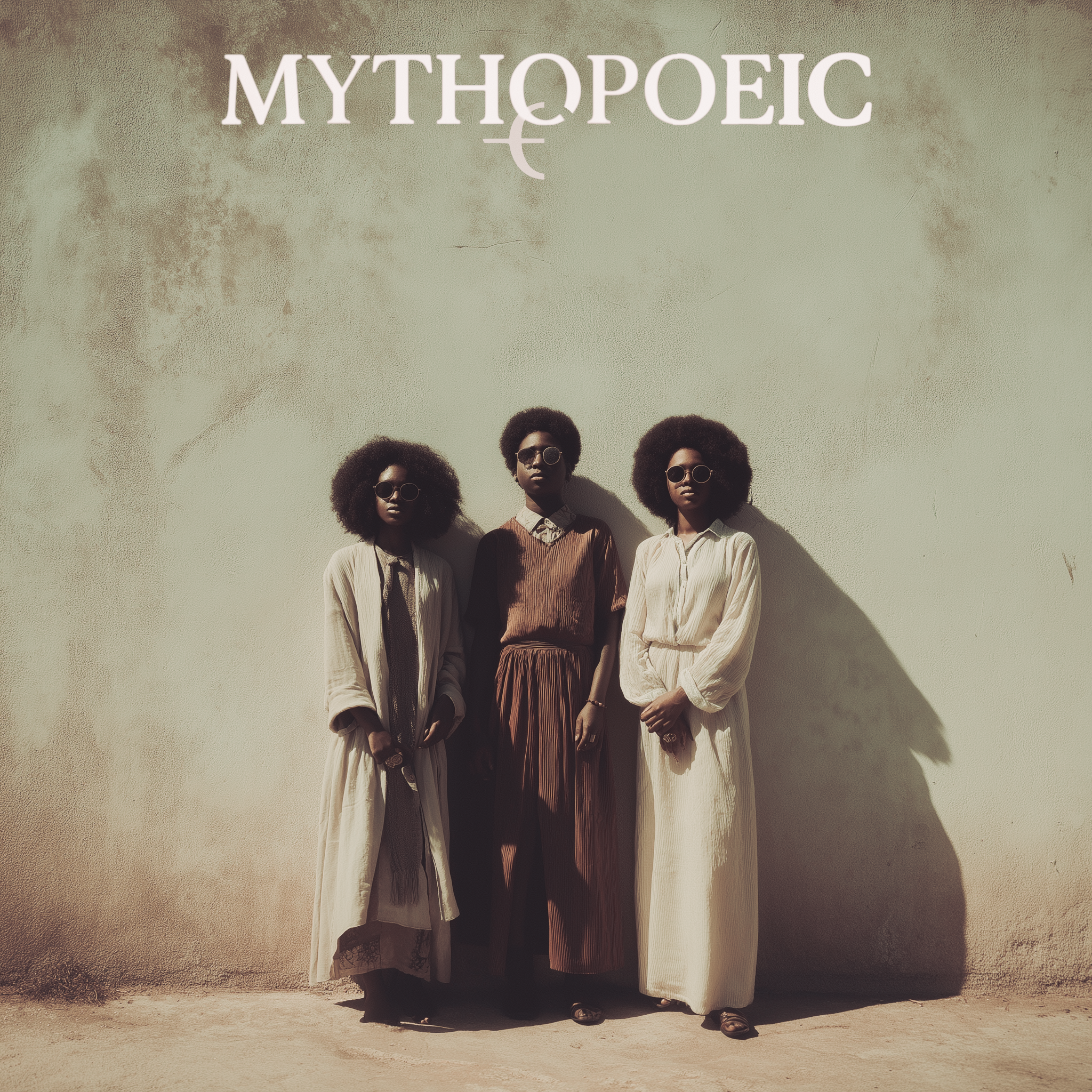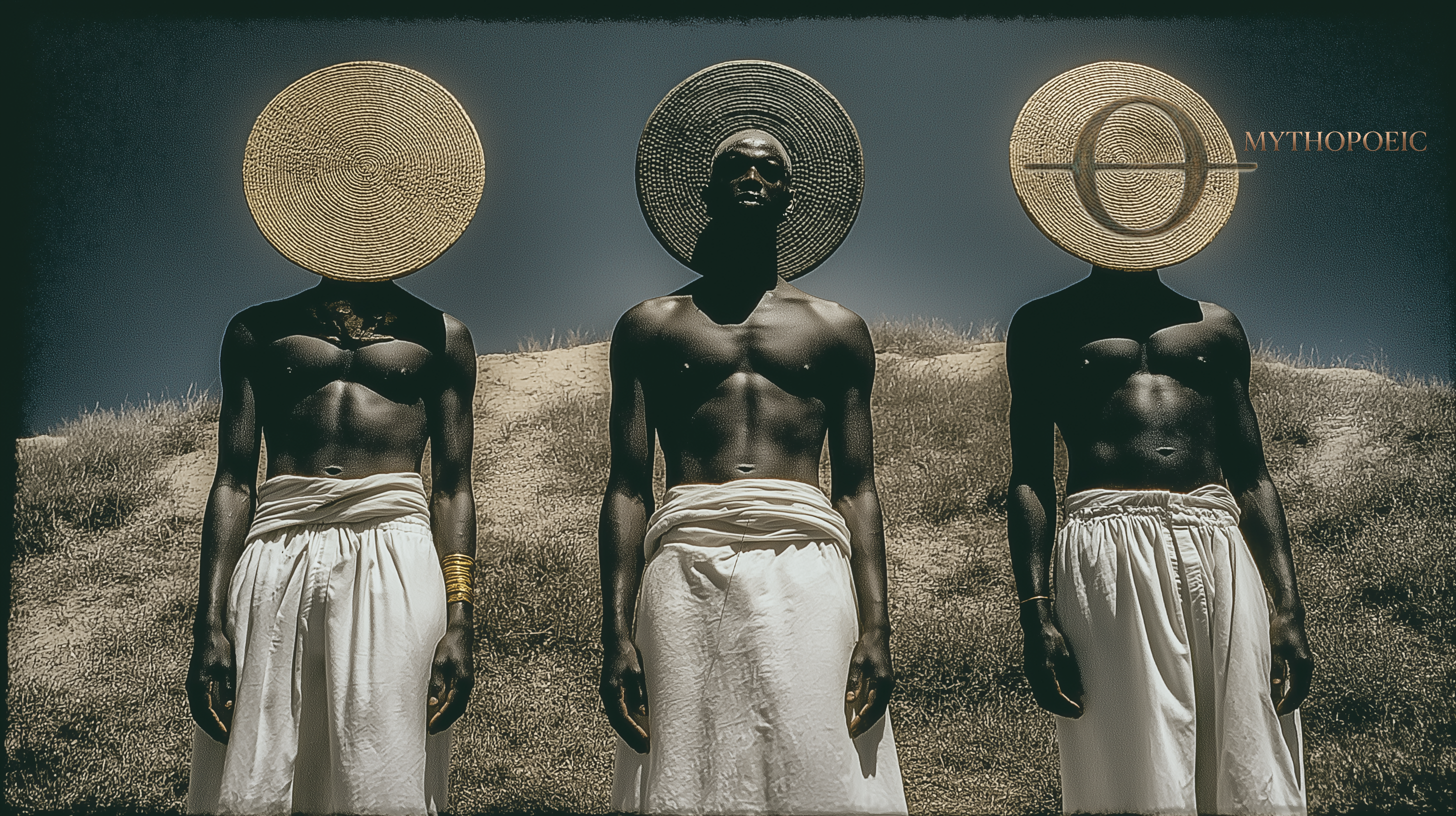
Four chapters, one long conversation with the old world. We make a small number of objects and return to the oldest language there is: the one we carry against the skin.

We started with a cabinet of small things — an Atlas coin, a Cycladic head, a grandmother's wedding band — and the same question asked three times: what is this object actually for?
The answer we kept returning to: to remember. To mark a threshold. To carry a name. Ornament as notation, worn on the body because the body is the place that forgets last.
"Each piece is a sentence in an argument with forgetting."
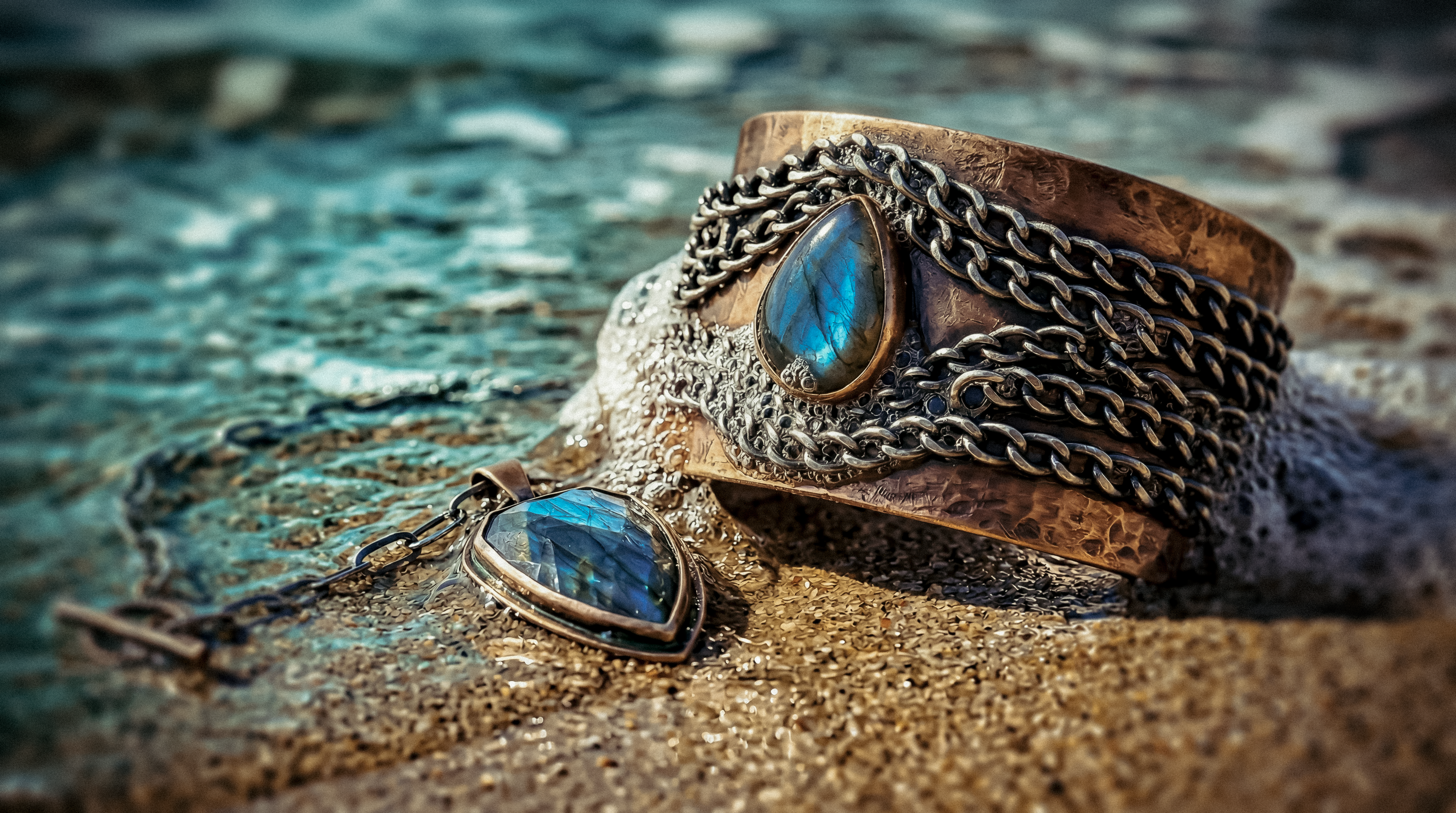
Every Mythopoeic piece is cast in the Lisbon atelier by a small team of four. Bronze is poured into hand-cut moulds; silver is lost-wax; stones are set by thumb-pressure and a quiet kind of patience.
We make fifty pieces per edition. When those fifty are gone, the mould is broken. We are not a factory — we are a memory, working with metal.

Oceanus carries depth. Nomad carries wandering. Sacred Earth carries the root. Eternal Bond carries the vow.
These are not themes so much as weather systems. Each collection begins as a stack of old photographs and closes as a small object you can hold in your palm.

A piece of Mythopoeic is, by design, older than the person wearing it. Weighted, solid, difficult to break. We expect every edition to outlive its first owner by roughly a century.
When you buy a piece, it arrives with a provenance card — signed, numbered, and with space for the names of those who will wear it after you.
See the CollectionA working glossary of the glyphs, curves and shapes that recur across the collections. These are old words, translated gently into metal.
Recurrence. Depth. The thing that returns whether you invite it or not.
Drift and re-arrival. The way a place stays while moving.
Small origin. A thing folded inside itself, waiting for weather.
Two lines that do not end. Worn as proof of keeping a promise.